The Five Stages of Enlightenment…

Hello again, everyone. Thanks for all your comments about the article on the Unitive level of development. Judging from the fact that as I write this over 140 people have posted comments, many people found this post interesting. I could respond to your comments, but since there are so many, and because it’s time to move on to something new, I’ll resist the urge. I wish I had time to respond to all your comments, but I have a million other irons in the fire and I just don’t have enough time to do so. I hope you understand.

I do appreciate it, though, when you post a comment. In fact, I’d be interested to hear from you about what you’d like me to write about from this point on. I can’t promise that I’ll write about everything you suggest, but I’d love to have your input. So please let me know what you’d like me to write about next.

Here are a few of my own ideas: a discussion of the ideas of Ken Wilber; or those of Eckhardt Tolle; a series about Holosync (how to get the most from it, why it works, what happens when you use it, how to deal with what happens when you use it, and so forth); a series on the shadow aspects we all have and why dealing with these shadow parts dramatically accelerates your growth.

There’s also a lot I could say about success, how to create what you want in the world, how to make more money, and other related topics. I have a lot to say about how what goes on in your mind unconsciously creates your moment-to-moment feelings, behaviors, the people and situations you attract or become attracted to–and, really, your entire experience of life–and how you can make this creative process conscious and have much greater control over it.

So let me know what you would like me to write about.

Now, on to something else…

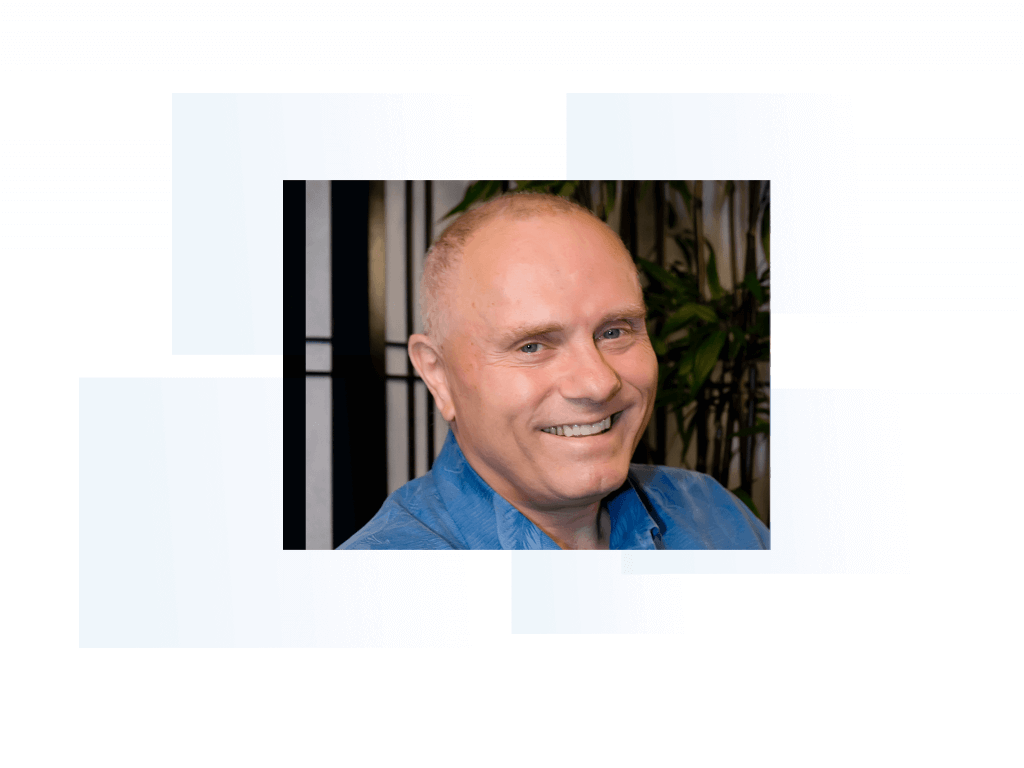
Zen master Genpo Roshi and I presented another workshop on May 2-3 in Seattle. As with our Los Angeles workshop, it was packed–actually oversold, with a waiting list–and again those in attendence were blown away by what happened. (If you were there, I invite you to post your comments. And whether you were there or not, I invite you to come to our next workshop, June 28-29 in New York. Just go to www.centerpointe.com/bigmind to register–and, I just extended the Early Registration discount for a few more days, saving you $200.00 if you register right away.)

This workshop was different from the one we did in Los Angeles. First, Roshi and I both present extemporaneously, in the moment–which allows the material to be always fresh and different. Second, each workshop is new and different because the people are different each time and, as we present, we spontaneously respond to the immediate needs of the group.

As I watched Roshi present and work with people I was struck by several things. First of all, the material he was taking people through (experientially, not just intellectually) is something only a handful of enlightened teachers in the entire world even know about, much less teach. Second, NO ONE in the world could present it the way he does.

First, a teacher has to be fully awakened to even know about this stuff, and there are VERY few people anywhere who are where he is. Trust me on this. I’ve been around a lot of very highly evolved people–people who are considered to be awakened–and I’ve never met anyone like Genpo Roshi. He IS the real deal. And, the Big Mind process he has created (and is still creating, since it continues to evolve) is a real stroke of genius. With it Roshi can teach anything experientially, so that you ARE it rather than just learning ABOUT it. The insights, the big ah-ha’s that happen in this process come out of the audience members. Genpo Roshi facilitates drawing it out of you, but it’s all inside of you–which demonstrates that it really is true (and not just a cliche) that all the wisdom in the universe is inside of you.

You just have to know how to access it, and Genpo Roshi has created an elegant way to do that.

His skill in working with people continually amazes me. In my post about the Unitive level of development I noted that Unitives catalyze others just by showing up, and Genpo Roshi is a great example of this. There’s something about just being with him, even before he does any teaching, that affects you. Just watching a person who is so completely comfortable in his own skin, so totally comfortable being a human being, does something to you.

Quite frankly, as I write this, I’m somewhat at a loss to express exactly what I mean by “being so completely comfortable being a human being.” You just have to spend time with him to appreciate how different his way of being in the world is from that of other people. I so hope you’ll find a way to come to one of our workshops so you can experience this for yourself.

One thing Roshi did in Seattle was to take people through what are called the Five Ranks of Tozan. Tozan was a Zen master who lived about 1200 years ago, in the 800’s A.D. Tozan described five stages of enlightenment (you can google this, but most of what I’ve found online is not very clear, and Roshi tells me that most written material leaves out a lot of esoteric stuff that he does include. Plus, his way of teaching has a way of making all of this very clear and accessible to modern people).

At any rate, Roshi took the audience through these five stages, not by telling about them, but by having people BE in and speak from each stage so they could see what it’s like. This is part of the genius of the Big Mind process–it allows you to BE something rather than just be told about it. I’ve been in several small groups of four or five people where he took us through these stages, and it’s been a profound experience each time. This time, however–even though it was with a much larger group–I thought the way he took people through the Five Ranks was particularly stunning. I sat there thinking, “Wow. You couldn’t experience this with anyone else, anywhere else in the world.”

Let me give you a brief tour of these five stages. I can’t, in a blog post, give you the experience of each stage (though my wife, when she read this post, told me that she experienced an altered state), but I can tell you a bit about them. I think you’ll find this very interesting. And, because some of you want shorter posts, I’ll take you through stages one, two, and three in this post, and then I’ll finish the Five Ranks with stages four and five in my next post.

First, I want to make a distinction between a state experience and a stage exerience. When you experience the transcendent while listening to Holosync, or with the Big Mind process, you are very likely having a state experience. You visit, and then, when your Holosync session ends, or the Big Mind process is over, you return to the relative world, the world of your mind, the world of subject-object, of me and not-me, of separate things and events.

In a stage experience, however, you permanently inhabit a place rather than just visiting. In my posts about the developmental process, each stage I described is a place you inhabit, not a place you visit. In terms of spiritual attainment, you might have a spontaneous experience of a higher stage, or you might have such a experience because of a practice you’re doing (Holosync, vipassana, TM, Big Mind, etc.). When the experience is over, though, you’re back where you were before. The experience becomes something that happened.

Later, if you have enough of these state experiences, you may get to the point where you fully embody that experience, at which point it becomes a stage you inhabit, rather than a place you visit. Instead of visiting, you embody the experience in every moment. Each visit, each state experience, does affect you, but it usually takes a while before these state experiences grow into a true stage experience, a permanent embodiment of a new and higher perspective.

So when Genpo Roshi takes you through the Five Ranks, even though he’s able to give you an experience of each stage (in the Big Mind process, you become each stage, at least during the process), these experiences are almost always state experiences. This is because there are some deep and fundamental shifts in perspective that need to take place if you’re to fully inhabit these stages, and you might not be ready to make those shifts.

Very few people on the planet actually live in these stages (though we seem to be in a period of history where a much larger number of people than before are growing into them). And, it appears that through the Big Mind process a person can move through these stages more quickly. Still, fully embodying each stage does require a fundamental, internal change of perspective, and these changes don’t happen easily for most people.

Still, these state experiences are extremely valuable. They can eventually lead to stage changes, and they also give you a preview of where you’re heading–or at least a preview of where you could be heading. These experiences give you an understanding of what road you’re on, and what the journey ahead might be like. And, these experiences can have a very positive effect, even if you’re “just visiting.”

Finally, there’s so much more to say (and even more important, experience) about the Five Ranks than I could possibly cover in a blog post, so this will of necessity be incomplete, an overview, a taste.

Nearly all human beings are “pre-stage one” in terms of the Five Ranks. In pre-stage one you’re living in the relative world, and don’t really know about the transcendent, at least on an experiential level. You’re caught in the mind-created world of separate things and events. Pre-stage one would include, for instance, all the Susanne Cook-Greuter stages up through the Strategist–which includes 98-99% of all people. The Magician is probably the first stage that could embody a stage one perspective in the Five Ranks.

It’s possible to have an experience of the transcendent at any stage, but until the Magician it’s much less likely that a person would be interested in exploring the transcendent if they did have a spontaneous experience of it. There are, of course, exceptions. Also remember that you will interpret any experience from your current developmental level, and the Magician is the first such level to see things, at least some of the time, in a non-dual way.

In pre-stage one you live in a solid world of separate objects and separate things, the world of subject-object. In this world certain separate “things” do something to other things, and the world is divided into separate events, separate objects, and separate people. This dualistic, relative world is a world of good and bad, here and there, yin and yang, life and death, having and not having, appropriate and inappropriate. It’s a world where the past and future are real (as opposed to a world where Eckhardt Tolle’s now moment is the only reality).

Once you get to stage one, though, you’ve realized that there’s more to life than just the relative world. You’ve had an experience of the transcendent which underlies the relative world, and you’ve learned how to get into the transcendent when you want to. You can’t, however, stay there. When you stop doing whatever allows you to get there, you return to the relative. You can visit, but you can’t stay.

In the transcendent, everything just “is”. It isn’t good or bad. In fact, there are no qualities to anything, and no distinctions are made. Qualities and distinctions are part of the relative world. What’s more, the transcendent has no beginning and no ending. It’s unborn and undying. It also has no boundaries. It includes everything. Everything is in it, and it is in everything. From the transcendent, there’s nowhere to go, because you’re everywhere. There’s nothing to get, because you’re everything. And, there’s nothing to be afraid of, because there’s nothing outside of you that could threaten you. Everything, including the suffering of the world, is just part of the dance of the universe. Everything is perfect, peaceful, and timeless. In the transcendent, it’s always now.

You visit this place, once you learn how to do that, and it renews you, revitalizes you, beckons you. It tells you that there’s something more to life than you thought there was. Eckhardt Tolle is inviting people into this space, and gives some great hints on how to get into it. Unless you make certain fundamental shifts in perspective, though, your mind keeps pulling you back to the relative world, to the world of the past and the future, and out of the now moment.

So that’s the first stage. You can visit the transcendent, but it isn’t your permanent experience. To get to the second stage, there are some important insights you need to have and certain things you need to drop. The first thing you need to do to get to the second stage is to fully surrender to what is. In doing this you understand at a deep level that there are certain things about the universe and about being human that just are the way they are. There’s no escape from them, and there’s no changing them, and resisting them just creates suffering.

For instance, people, things, and events exist in time. They come into being and eventually pass away. Because of this, and because to be here as a human being you have to be attached, at least a little bit, to the people, things, and events in your life, there always will be suffering in the world. Most people, of course, are attached a lot, and as a result they suffer a lot. People live, and then they die. There are causes and effects–karma. Sometimes you don’t get what you want. Sometimes you get what you don’t want. Resistance to these fundamental facts of existance, and attachment to it being otherwise, creates suffering, and keeps you stuck in the relative world.

To move into stage two you have to surrender to all of this–not intellectually, but at a deep level.

This is, by the way, the first of my Nine Principles for Conscious Living–Letting Whatever Happens Be Okay. Surrendering isn’t passivity, however. It doesn’t mean that you don’t act to get what you want. It does, however, mean that you understand (and accept) the way the universe works, and even while you take action you aren’t attached to your actions turning out a certain way.

So, surrender is the first step in stage two.

The second step is even more difficult: submission. Submission is generally accomplished by submitting to the living embodiment of the Way, the Tao, the way things are. In Zen (and in other traditions) this means submitting to an enlightened teacher, one who is the embodiment of the Way, the Tao, or whatever you want to call it, though it could also mean submitting to Jesus, for instance, or some other idealized or non-physical representation. It just turns out to be easier to submit to a living embodiment rather than an idealized one.

Westerners, of course, have a lot of trouble with this one. This is probably because we have such an independent point of view and the idea of submitting to another leaves a bad taste in our mouth. But we also resist it because there are so many egoic and false teachers around and we’ve become jaded and untrusting (for good reason). It’s difficult to trust that a teacher could really have our best interests at heart and not have some personal agenda. What if he brings out that big barrel of kool-aid?

Submission, though, is essential for the next step (or at least makes it MUCH MUCH easier), because in the next step you have to do what in Zen they call “stepping off the one-hundred foot pole”–stepping into the unknown–and that takes a lot of trust. You have to know that if you step it will be okay, that someone will catch you. The teacher, having already done this himself, helps you realize that it can be done (he seems to be okay, in fact, more than okay). His example and reassurance allows you, hopefully, to take that leap, that step into the unknown. Submission is, at least partly, your saying, “Okay, I trust that it will be okay when I take that step.”

To take that step you have to go through what Genpo Roshi calls “Great Doubt.” This is where you doubt–and I mean really doubt, totally, without reservation–that any of the stuff upon which you’ve based your Self, your identity, and your life, will ever save you, make you happy, solve the problems of being human, get rid of the basics of the human condition (including that all things–including you–are in time and eventually pass away), lead to any sort of salvation, or end your suffering.

This means that you doubt your ideas about yourself, the world, other people, life, and anything and everything else–all of them. You doubt your concepts, your premises, your way of seeing things, and the memories you string together to create a sense of an enduring “you”. You doubt all your personal defenses. You doubt the past. You doubt the future, and especially that the future will save you in any way. You doubt the value of all your accomplishments, the badges you’ve earned. You doubt your identity, your roles, your story, your idea of who you are. You doubt all your healthy eating habits, your meditation practice, your ideas about the way the world should be, your ideas about mental health, and so on and so on. You doubt the separate self. You doubt that any of this will ultimately save you or get you anywhere.

You also doubt the teacher, enlightenment, meditation, religion, spiritual growth, personal growth–all of it. None of this, you realize, is going to save you or change the basic human condition. All of these things, ultimately, are ideas about life, creations of the mind, representations of reality–but not reality. They are hopes, but not realities.

If you really doubt EVERYTHING, if you throw out all hopes, it leaves you with nowhere to stand, nothing to hang onto, no reference point. Everything you thought life was about, you doubt and discard. When you do this, really do it, there is utterly NOTHING left but now and your awareness of now. This is what Eckhardt Tolle is talking about, though he’s suggesting ways that for the most part allow you to experience the now for a few moments. Great Doubt is the doorway to being there all the time.

Is this doubting of EVERYTHING, including your own sense of self, scary? Thinking about doing it certainly is. My own experience of DOING it wasn’t scary, but thinking about doing it, for most people, certainly is, because it’s a death of everything you think of as “me”. This is the step off the hundred-foot pole I spoke about, the step into the abyss. It seems as if this step would be an annihilation of yourself, of your life. In reality, it’s an annihilation of what you mistakenly thought was you, which creates an opening to the real you. But when you consider it, it certainly doesn’t seem that way.

You can probably see why you have to have supreme trust, supreme faith, in order to do this. Otherwise you won’t really do it. This is also why, when Genpo Roshi leads people through this step using the Big Mind process, it’s likely to be just a state experience. You doubt, you let go of everything you’ve been clinging to, to whatever extend you’re able or willing to do (which varies from person to person), and to the degree you really do it, you have some amount of experience of what it’s like. But unless you’ve REALLY surrendered and submitted (which is what gives you the trust and the faith you need to fully go into this experience) you won’t fully do it. If, however, you do really do it, something extrordinary happens.

That something is what Genpo Roshi calls Great Death. This REALLY sounds unappealing, doesn’t it? When I experienced this I was ready for it to be very negative. Instead, it turned out to be incredible, and nothing like I thought it would be. Great Death turned out to be a rebirth, a rebirth into Big Mind, into the transcendent. Once you really let go of ALL the mind-stuff, there’s nothing left but the transcendent.

In nearly every spiritual tradition the teacher will tell you that your mind is in the way of experiencing yourself as bliss, peace, God, the transcendent, the All, Christ Consciousness, nirvana, Great Liberation, or whatever you want to call it. But to really drop your identification with the mind you have to doubt EVERYTHING related to it, and since we’re so attached to all those ideas, concepts, beliefs, idealized futures, identities, and so on and so on and so on, the actual dropping of them, on a deep and visceral level, turns out to be really difficult.

In fact, you might ask, who is dropping these things? The one who is dropping them IS the mind, the ego, the separate identity, the sense of being a separate self. Can the ego drop the ego? That would be like seeing your own eyes, or biting your own teeth, or touching the tip of your finger with the tip of the same finger. So this isn’t really something you can decide to do, because who would do it? The ego, the identity, the sense of being a separate self is just an idea, and an idea can’t do anything–any more than the number three (another idea) can do anything.

When you identify yourself as an ego it really does seem as if the ego, the separate self, is the one doing something. In actual fact, doing happens, but there is no separate self that actually does anything. I know that this flies in the face of common sense, but nevertheless it’s true. Doing happens, but the separate doer is an illusion. For that reason, the no-self state (or whatever you choose to call it) is something that either happens or it doesn’t. A teacher like Genpo Roshi, a fully enlightened master with great skill and experience, can sometimes put you in a place where it happens, if you are ready, but it isn’t something that you can do, because the separate you doesn’t really exist. What you think of as you is really your idea of you, and that idea can’t do a thing.

Ken Wilber has said that enlightenment is an accident, but meditation (and other spiritual practices) make you more accident prone–one of his better bon mots.

So, if you really doubt everything, which probably only happens if you fully surrender and submit–though, as I said, it is possible though more difficult to do it by submitting to an ideal rather than another person–you can step into the abyss (in other words, drop everything you always thought was you), or at least what seems like the abyss. (More accurately, you might say that if surrender and submission happens, stepping off that hundred-foot pole might happen, too.) The irony is that what seemed like a potential disaster–having nothing to hang onto, having not even a single molecule to stand on–turns out to be the doorway to the infinite.

If this happens, you are in the third of the Five Ranks. You are established in the transcendent, not as a place to visit, but as a place to live. This third stage is what is generally thought of as enlightenment–taking up permanent residence in the transcendent. In this place you aren’t just “one with everything,” you ARE everything, and everything is you. (In fact, you always were everything. It’s just that now you’ve realized it, not intellectually, but experientially.)

The experience is one of having no boundaries, no beginning, no ending. From this perspective everything is just as it should be, including everything you used to think of as “good” and everything you used to think of as “bad.” D.T Suzuki described this experience as “just like normal life, but about two inches off the ground.” Alan Watts said that it can be felt in one of two ways: either it feels as if when the universe moves, it moves you, or it feels as if when you move, it moves the universe. Both are really the same experience, but from two different perspectives.

The Third Rank is a great place to be, since everything in that place is perfect. You can hang out here forever, and many people who make it this far do. Most of the people you’ve heard of who are thought of as enlightened are (or were) in this third stage. However, there’s more, and in the next post I’ll describe, first of all, what’s missing from this third stage, and why you can be just as stuck in this stage as most people are in the pre-stage one relative world, and then I’ll describe stages four and five.

Until then, be well.

 
icon for podpress  The Five Stages of Enlightenment... [28:18m]: Play Now | Play in Popup | Download (10647)

165 Responses to “The Five Stages of Enlightenment…”

  1. Raywyn says:

    Thanks for a great set of articles. I just read them and am thrilled to understand the stages of enlightment we are going through. This helps take away the fear and support others on their journey also – great job Bill! Blessings RaywynME

  2. theresa lynch says:

    I am very much enjoying your series on Eckhart Tolle, and I must admit that, as a Christian, I’m learning new things about Christianity from your interviews. I knew, for instance, that Mother Teresa described her personal pain in her diaries. I was not aware that she associated the source of her pain with her feeling that she was “estranged” from Jesus. This concept, of course, is not based on Biblical teachings, in which Jesus says, “I am with you always,” and leaves his followers the rite of the Eucharist, in which they mingle Christ’s body with theirs.
    There is so much overlap in the teachings of the East and the West, and I would like to see you interview a non-fundamentalist Christian on this topic. I would suggest Father Thomas Keating, or possibly Monsiegnor Chester Michael, author of Prayer and Temperament. Actually, you could do one interview with each, to get a broad scope on the topic.

  3. Damian Harvest says:

    Will these advancement in STATES OF BEING or can they be, or are they on Holosync CD’s. They seem familiar to me but I’m not sure.

  4. David Vaughan says:

    Dear Bill: I’m an older dude, a meditator of a few years, and just began dive this past week. It’s lighting me up. I’m also a student of Genpo Roshi. Could you do a talk on specific ways Big Mind works with Holysync in AQAL(All Quadrants All Levels-Wilber)? Does invoking Big Mind bring on Delta state? It can, but usually more meditation is needed to sustain it. More with Holysync in meditation is then less time sitting in order to get positive results. That’s my take. Thanks for everything. David

  5. Louise Feeney says:

    Can you let me know what would be the difference between the Centerpointe’s products as opposed to the Silva Mind method and Lifeflow system. I would also like to know how long it takes to go through all the differerent levels of cds you provide.

    Many thanks

    Louise

    FROM BILL: Call Centerpointe at 1-800 945-2741 with questions about Holosync.

  6. Kevin Hoffman says:

    Wow!!! I just stumbled across your website and was so intrigued by what I have read in the first 15 minutes that I have ordered your Holosync program. I am a recovering alcoholic/addict. I have experienced the three stages you have talked about in your blog here, but the experiences have been fleeting. They seem to come and go. I understand it is a perfect world outside of my ears. I have participated in Deepak and Dr. Wayne Dyer’s lectures since the early 90’s and have been a believer in the laws of attraction for quite some time having watched The Secret and What the Bleep Do We Know several times. I have also read every book I could get my hands on along these lines as well as practiced the 12 steps to the best of my abilities. I have been practicing meditation consistently (20 minutes a day) and am very excited by the profound effects it has had on my daily life. It seems everything outside is a direct reflection of what goes on inside the mind. It also appears that my mind seems to be the enemy or the “roadblock” to further development. I have also read Eckharte Tolle’s books. I have a very difficult time practicing staying in the moment, but seem to be getting better at it the more I quiet the mind. I am thrilled to have found you and your site. I have been looking for like minded people and it seems I have found them. I am currently writing a book called “Anything But Sober”. It is “hope for the hopeless”. Help for alcoholic/addicts who can’t seem to recover. It took me 18 years of relapsing before finally learning what it took to stay sober and I would like to share my experience with the world to possibly advert some suffering of others having the same problem. Please let me know if there is any other information or sites you might recommend for someone like me and thank you so very much. Please also advise me of any service I can become active in along these lines.
    Thank You Thank You Thank You
    Kevin Hoffman

  7. Maggie Olsen says:

    It is delightful to read quotes from other old friends I’ve met (read and attempted to practice) along “The Way”. Many thanks to the tutorial of The Blog.

  8. sally katzenstein says:

    and now for something (not so) completely different.
    I’ve just returned from a “Soul Healing and Enlightenment” retreat with Master and Doctor Zhi Gang Sha. He’s recently authored “Soul Wisdom: Practical soul treasures to transform your life”. And they are. I ordered the Centerpointe tapes many moons ago and have tried many forms of chanting/meditation and this book presents totally new material: Soul language, soul dance, soul tapping, soul movement and soul song. On Master Sha’s website http://www.drsha.com is an introduction to very ancient, until now secret chanting practices of Yin Yang chanting and 5 element chanting. These raise individual and collective frequency and are a joyful and practical way to counteract what is amiss with ourselves and our environments.
    This is big-time enlightenment- and it’s fun!!!

  9. tettd says:

    i’m from addis ababa ethiopia i realy want to know all about meditiation even if i can get a chance i would like to have any cources which can vast my knowledge

    FROM BILL: Go read http://www.centerpointe.com

  10. Jordon says:

    Thank you so much bill!

    This blog post and the next one are the only places online that I have been able to find a clear explanation of the Five Stages of Tozan.
    There is, however, one section of this post that is unclear to me.

    You describe the need to let go of western doubt and scepticism, and submit to an ‘enlightened teacher’. You later contradict this statement when you say that “You also doubt the teacher, enlightenment, meditation, religion, spiritual growth, personal growth–all of it”.

    I would much appreciate it if you were to explain how these (seemingly) contradictory cocepts of submission and doubt fit together.

    thanks,
    Jordon

    Thanks

    FROM BILL: I didn’t say to let go of doubt–I said to doubt everything. However, part of “everything” is to doubt doubt, too. (Again, though, I didn’t say this in the blog post–I said to doubt everything that you think is going to help you, save you, make you happy, get you anywhere, etc. Doubt is the royal road to enlightenment.

  11. Vj Montanye says:

    Bill, I would love to have your next writing be on our adaptability to experiences of life, how to get the most positve out of them with Success. Going on three years with you and holosync.. thanks Vj

  12. k fuller says:

    Could you talk about romantic love in the transcendant levels? At the third stage of Tozan, it sounds like there is not much room for jaw-dropping, head-over-heels love.

    I am head-over-heels in love with my wife of 15 years. So far, holosync, your on-line courses and blog have helped me deal with changes in our relationship that I consider related to reaching mid-life. In fact, I don’t know how I would have dealt with my wife’s changes in perspective if I had not been letting everything that happens be okay.

    Can romantic love get deeper upto and including the third level or should I expect to become distant in that way?

    Thanks

    FROM BILL: Genpo Roshi sure seems to love his wife, and I love mine. Romantic love is a very human condition, and though people at the third rank often deny the relative side of things (which comes back to bite them in the fourth rank)–which could include a denial of romantic love–I don’t think there is anything (other than the delusions of the third rank) that would make romantic love end. In fact, my own experience is that it just gets better.

  13. Alemenia Mclean says:

    Hi Bill. This is some great stuff. I am taking you on-line expander course. I can hardly put in to words what I am going through. The Holosync has made this transition so much eisier. I would highly recommend it to everyone. I have been in a constant state of suprise sence the first lesson. Every thing that I need just seems to come to me the minute I say “HOW CAN I”. I will give you an example about how i proved to myself that the unconcious mind knows every thing you can do everything you have seen thought everything you are capable of. It was going to be a pretty cold night the weather man said drop below freezing and I had not been able to get someone out to service the heating system. we had already experienced 44 inside the house last winter and I said How can I get this thing going. I walked streight to the unit and as if I had done it a hundred time got it up and running even replaced the filter. Another time I ask myself how can you come to grips with the places that scare you and that very evening I was in the book store and My hand seemed to have a mind of it own it reached for a blue and black book By Pema CHodron “THE PLACES THAT SCARE YOU. A guide to fearlessness in difficult times. I ask why I feel the need to look for the answer outside of myself.(for a mate that want disrespect me,beat me steal from me in more ways than one) I am never perfecect enough. that day I experienced the same feeling and found the book ‘THE IDEA OF PREFECTION”. by KATE Greenville an amusing and moving story of unlikely love. and so many others that bring me to tears just to think of them. I do not have copy or print capabilities on my computer so I hand write everything from the test to the homework. to the lessons word for word. I think that that also happend because I needed to pay closer attention the words and not get stuck in the details of am I doing it right. I have been so blessed sence the firs day all this started from The Secret there is a clear path to this very e-mail I am now sending. I just wish I could see you face to face and thank you, words pale. You be well Menia Mclean.

  14. Alemenia Mclean says:

    I looked in the mirrow the other day and fell in love with me. for the first time in my life I know what it feels like to love myself, from the rub of my hand on my arm to the lotioning of my body. I really feel comforted by my own hands. This was there all along and I did not see it till I awakened enough to take the wheel of my own life. I feels good not to know, not to want to kno,A feeling there is nothing to get,nothing to be, nothing but moments of pure moments. A puzzel that touches your very soul, and is there even when I am not. Who would of thunk it this country girl with a 6 grade education has always been perfect and oneness with all things

Leave a Reply